Therapy for Self Criticism
If you're constantly hard on yourself, focus on your mistakes or feel that nothing you do is quite good enough, self-criticism can become exhausting. Therapy can help you understand where your harsh inner critic comes from and develop a more balanced and compassionate relationship with yourself.

Does this sound familiar?
You might:
Replay mistakes and think about what you should have done differently
Be much harder on yourself than you would ever be on somebody else
Focus on what you've done wrong while dismissing what you've done well
Feel embarrassed or ashamed when you make even a small mistake
Compare yourself with other people and nearly always come off worse
Struggle to accept compliments or believe positive things people say about you
Feel that you should be doing more, achieving more or coping better
Criticise yourself for having difficult feelings in the first place
You may know logically that you're being too hard on yourself, but find that knowing this doesn't make the critical thoughts go away.
Where does self criticism come from?
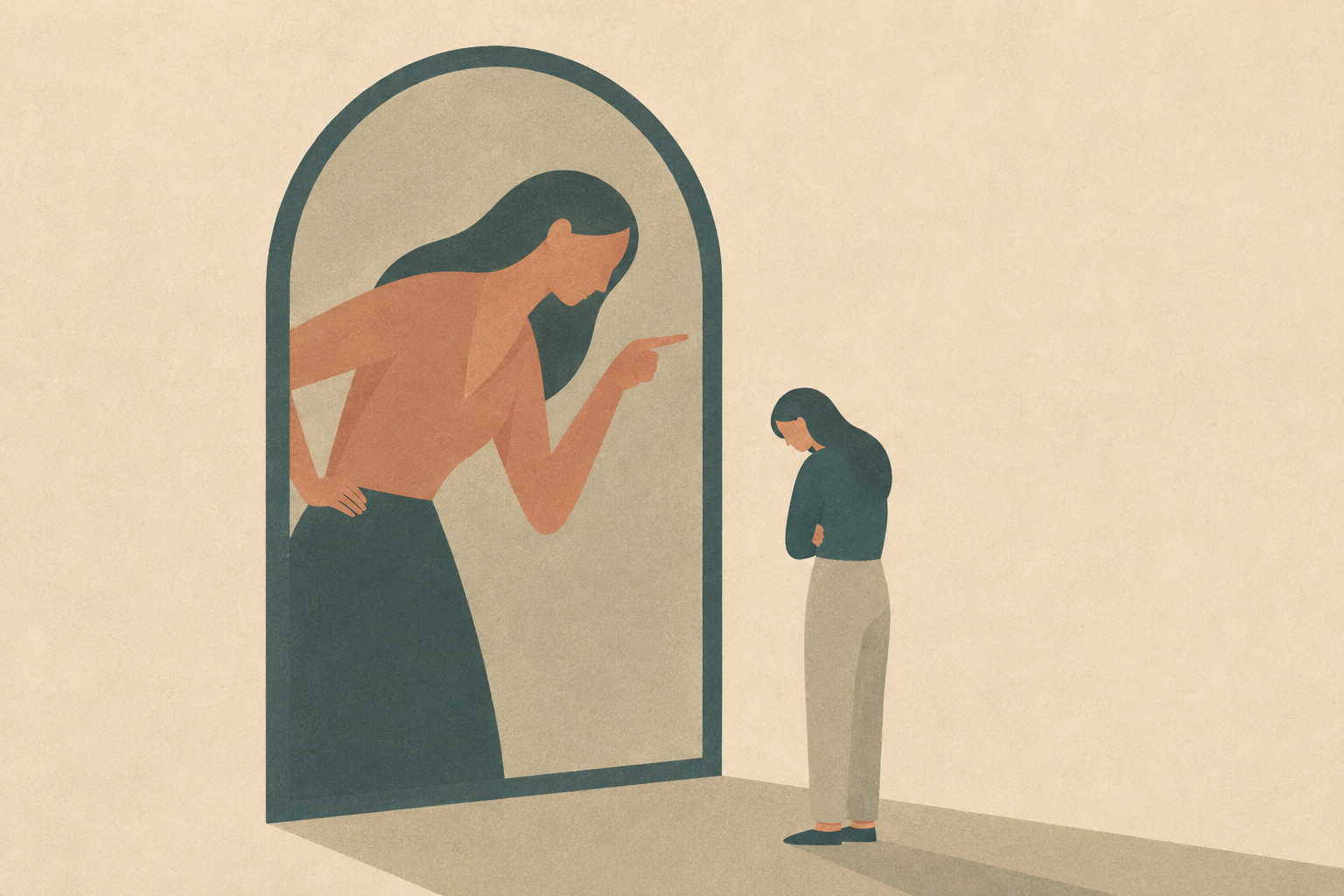
A harsh inner critic doesn't usually appear from nowhere. The way we treat ourselves can be shaped by our experiences growing up and by the ways other people responded to us.
Perhaps you received a lot of criticism, felt that approval depended on doing well, or learnt that mistakes weren't easily tolerated. You might have been bullied or made to feel different, leaving you with the sense that there was something wrong with you.
For other people, the origins are less obvious. You may have grown up feeling that you needed to be successful, helpful or undemanding to be valued.
Over time, these experiences can shape how you see and relate to yourself.
When being hard on yourself feels helpful
Self-criticism often has a purpose.
You might feel that being hard on yourself keeps you motivated, prevents you becoming lazy or stops you making mistakes. If you criticise yourself first, perhaps criticism from somebody else will hurt less.
The problem is that the strategy can become relentless. Achieving something may bring only brief relief before the goalposts move again. A mistake can become evidence that you're inadequate rather than simply something that went wrong.
Instead of helping you improve, your inner critic can leave you anxious, ashamed or never quite able to feel good enough.
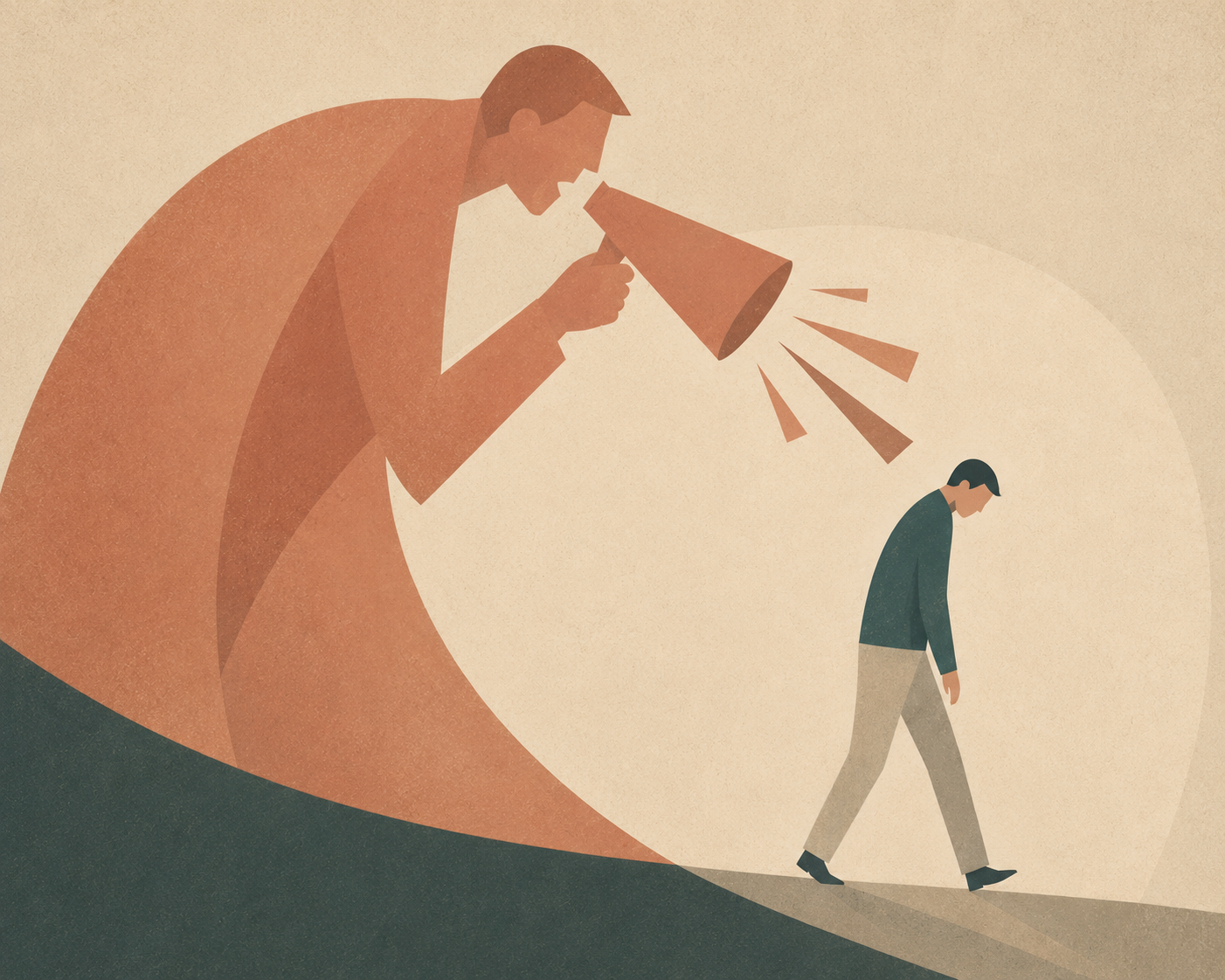
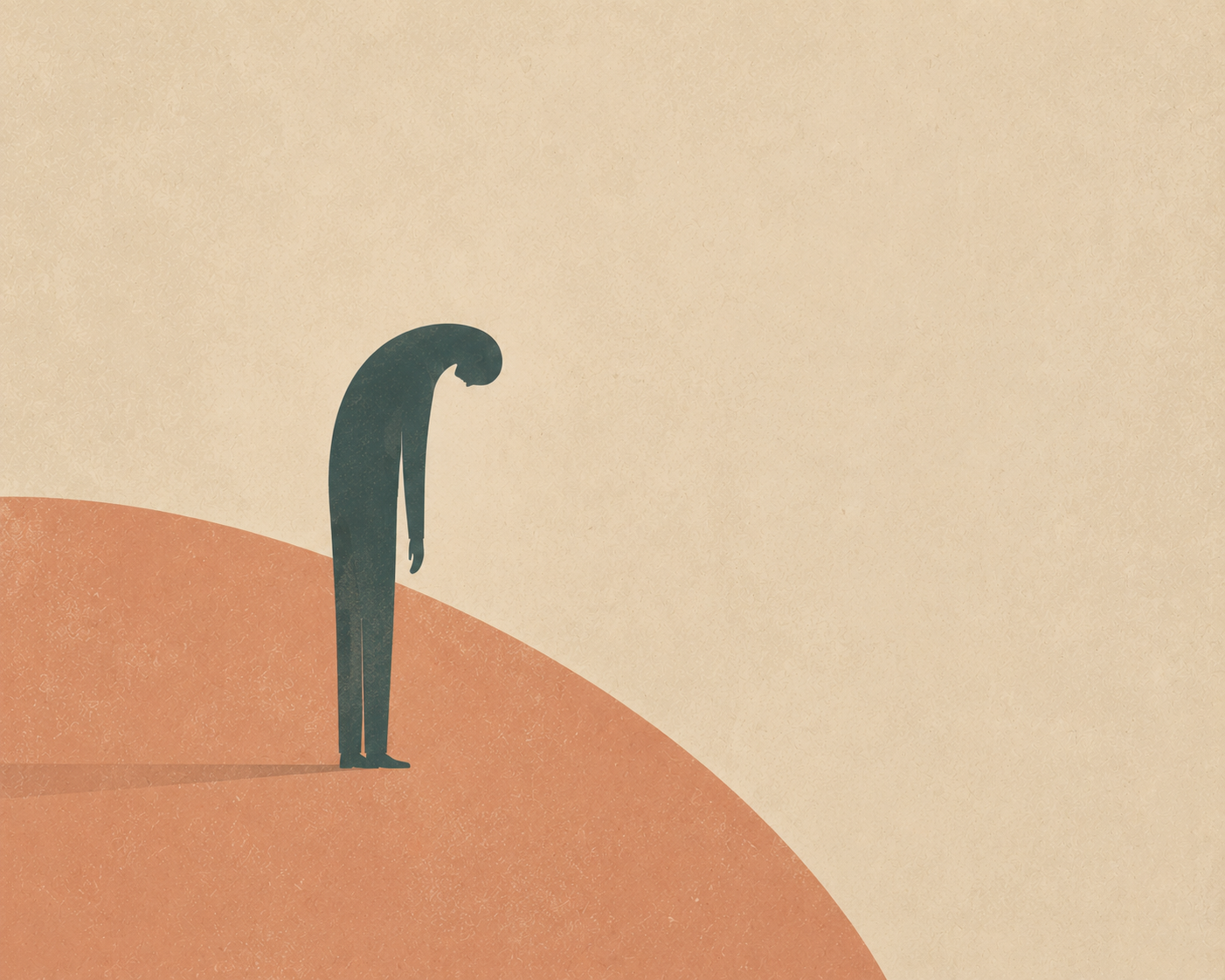
Self-criticism, perfectionism and relationships
Self-criticism doesn't only affect how you feel about yourself.
If you already believe you're not good enough, you may become particularly sensitive to signs that somebody is disappointed with you. You might overthink conversations, seek reassurance, hide parts of yourself or work very hard to keep other people happy.
You may also find it difficult to believe that other people genuinely like or value you. These patterns can be connected with attachment and fears of rejection, particularly when earlier relationships have shaped expectations about whether we are acceptable as we are.
What therapy can help you work towards
Recognising your inner critic rather than automatically believing it
Understanding why you learnt to treat yourself this way
Recovering more easily when you make a mistake
Feeling less ashamed of perceived flaws
Being able to recognise your strengths without immediately dismissing them
Feeling less dependent on achievement or other people's approval
Developing greater self-compassion without feeling that you're "letting yourself off"
Feeling more comfortable being yourself
The aim isn't to replace every negative thought with a positive one. It's to develop a fairer, less punishing way of relating to yourself.


Therapy for self criticism
I work with self-criticism and low self-worth online and from my clinical psychology practice in Cambridge. I often draw on Cognitive Analytic Therapy (CAT)and Compassion Focused Therapy (CFT) when working with self-criticism.
CAT can help us understand where patterns of self-criticism came from and how they continue to play out today. For example, criticism experienced from other people can gradually become something you do to yourself, even long after those relationships have changed. This fits closely with the way you already describe CAT as looking at patterns in our relationships and our relationship with ourselves.
Compassion Focused Therapy can help you develop a different response to that critical voice. This isn't about pretending everything you do is wonderful. You can still recognise mistakes, take responsibility and want to change without attacking yourself in the process.
Self criticism and young adults
Self-criticism can become particularly intense in young adulthood, when it can feel as though you're constantly being evaluated or comparing your progress with other people's.
At university, you might assume everyone else is more confident, sociable or capable than you are. Later, you may worry that you've chosen the wrong career, aren't progressing quickly enough, or aren't where you "should" be in your relationships or life.
I have particular expertise in working with young adults and students.

You may also find these pages helpful